
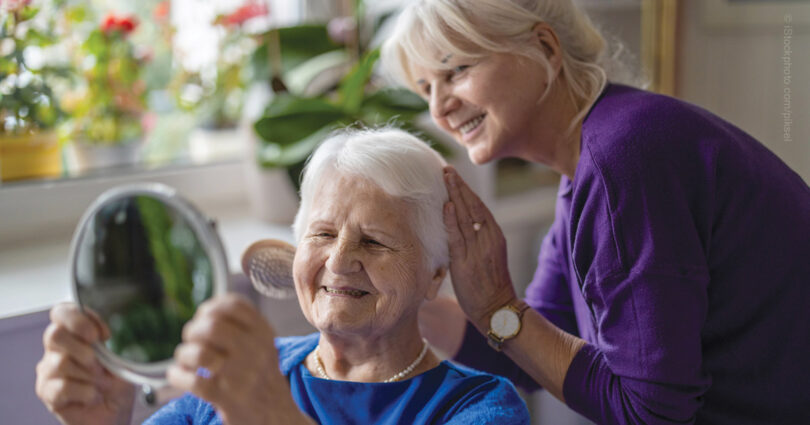
It will happen to most families. At some point, the elders in your family will become frail, experience a fall, or receive a diagnosis of dementia. However it begins, you and your family will need to face those difficult decisions regarding their care while preparing yourselves for the important task of caregiving. You will have to assess your loved ones’ health needs, determine how much help they require, and decide if they are able to function alone in their own home.
I have published previous articles in Celebrate Life Magazine, encouraging families to keep their loved ones in their own homes for as long as possible. Though this can be difficult, it can also be an immense blessing. We know that many caregivers face burnout and anxiety over the monumental task of caring for a loved one, so I want to offer suggestions to make this time in your life easier for you and for your ailing family member.
Don’t fear asking for help
Never feel ashamed of asking for help when caring for a loved one. There are many ways others can give small blessings that offer a caregiver immense relief. Church members may be willing to start a meal train for daily dinners. You can pay a trusted friend a small amount to sit with your loved one a few times a week. You can even put out feelers for a good caregiver to come in for several hours each day. (All of my clients come to me by word of mouth from Catholic friends!)
If your loved one’s health issues become more concerning, you might consider moving him in with family members, encouraging the whole family to share in the care. I have witnessed the declining conditions in many nursing facilities, and there are good reasons to promote in-home care, if possible, with family members taking the lead.
Caring for another person is not something to do alone. Through my years of various caregiving settings, I have learned that it’s not reasonable to “fly solo.” We must humble ourselves by reaching out for the help we need, not being afraid to ask friends, extended family members, or even trained caregivers for help. It is a tiring, often stressful job, and it can sometimes stretch out for years. You will need help.
Seeing with God’s eyes
For many years now, since my first “gig” as a caregiver for my mom in my home, I have seen both the beauty and the challenges of caregiving. It is a bittersweet gift that floods your soul with love, if you give it all to God.
My mom was a very insecure woman. She often said rude things to me and my children. When my mom moved in, I asked God to help me love my mom unconditionally, and He did. One day, after she said something hurtful, I had to give her a shower. I worked my way through all of the body parts and was washing her feet. Suddenly, an image of Jesus washing the feet of His thickheaded Apostles came sharply into focus in my mind. I was glad for the spray of water hiding my tears, keeping me from upsetting my mom. I realized how thickheaded I was being by allowing past hurts to rise to the surface. My heart was miraculously changed in that moment, and my newfound love for my mom never wavered again. My care of her became a blessing, and she was happier, too.
When she passed away, I decided I wanted to continue as a trained, professional caregiver, working for an agency. That experience opened my eyes to the sad state of many nursing homes and agency caregivers and to the seemingly unending need for help in caring for the elderly. It also opened my eyes to the fact that many professional caregivers have no concept of the dignity of all people, from the moment of creation to natural death, and are not practicing their job out of charity. That attitude angered me and was the beginning of my call to become a voice for the elderly, for better eldercare, and for the families who need help.
Before long, I set out on my own, working directly for clients and families and offering respite to those putting in long hours to care for loved ones.
Significant acts of love
All of our elderly—rich or poor—deserve the very best of care, and there are ways to make that happen, if you know where to turn for help. First of all, turn to family members, then to your faith community, and ask if they know of any good caregivers. God will send the most beautiful people into your life, if you just ask!
I’m always surprised by friends who come to visit when I am with a client. They might distribute Communion after Mass or stop by with home-cooked meals. Some bring boxes of chocolates or bouquets of flowers. Some come to read to their ailing friend because they know that the elderly are in need of stimulation and loving attention, even those who can no longer communicate! It’s very heartwarming.
These small gestures show great love and provide strength and relief for the main caregiver, especially when their loved one is homebound. The best thing you can do as a caregiver is to express your heartfelt appreciation, tell them how much their care means to the person and you, and ask them to stop by again soon.
You might also have friends in a similar situation with whom you can “swap errands,” along with some caregiving, which will get both of you out of the house on a regular basis. I’ve learned that boldness and creative problem-solving come in very handy when you are a caregiver!
All Catholics are called to perform works of mercy, so we should be thankful for these opportunities to show love and support to our elderly brothers and sisters and their caregivers.
Throughout the years, I have helped many families, but I am not the only one! There are many other caregivers around who feel the same and who serve with love and compassion, some of them even forming their own caregiving groups to meet the needs of the elderly. There are also agencies and other companies that fill various needs, and you will want to contact those mentioned below.
Caregiving resources
The National Council on Aging, accessible in all 50 states, is a great place to start, especially if finances are slim. My mom qualified for a few hours of free care every week, which gave me time and the peace of mind to go shopping, as I knew that she had someone with her. They also offer free home-delivered meals at no cost to most clients. Additionally, many nursing homes offer day programs filled with crafts, games, or even PT. Some even provide transportation to and from your home.
Another call to make early on is to a local hospice company. Your loved one might not qualify for hospice at first, but it is good to get your “foot in the door,” and it is helpful in so many ways. These companies provide hospital beds, incontinence supplies, and things like padded seat cushions and ointments to protect from bed sores, all at no cost to you. Nurses will visit as needed and can help with bathing. You can request essential medical equipment to help with higher levels of care. And as time goes on, your loved one can also receive respite care.
I once worked for a family whose loved one came down with shingles, and immediately after, she tested positive for COVID. To help care for her, the client’s hospice company picked her up for a two-week stay in their facility, which made it easier to treat her and gave us caregivers some much-needed rest.
Unfortunately, hospice companies are also suffering from a lack of staff, just like nursing homes, so do your homework! Check online for customer reviews for these providers.
We are all called to help those in need. Some of us might visit prisoners, pray at abortion facilities, run a pregnancy care center, or like me, spend their days hanging out with an elderly friend and meeting people who, at first, don’t want you in their house, and who months later end up being the dearest of friends.
As we watch our loved ones age and require increased help, remember that caring for the elderly is an incredible blessing, but it can be hard. Take some time for yourself and ask for assistance when needed so that you can feel strong enough to serve your friend or family member just as Christ would.

Facebook Comments